The Pause-and-Pocket Method: A Raleigh Practice Fix for the Measure That Won’t Cooperate
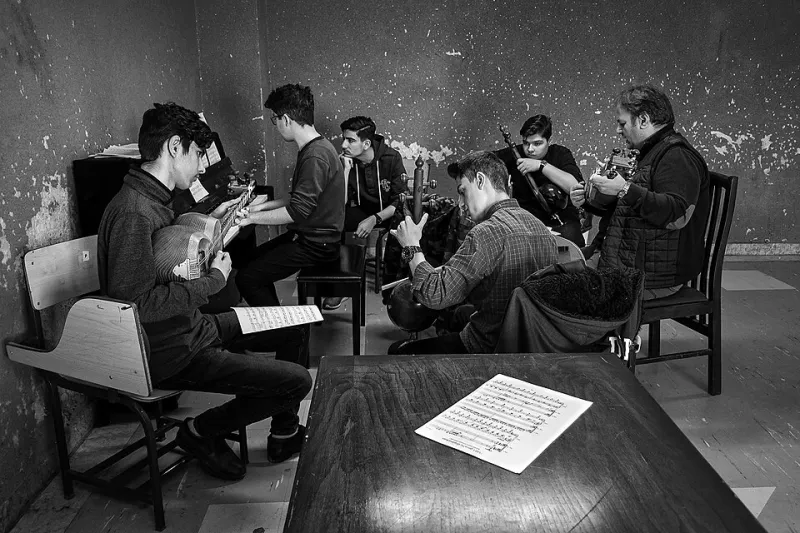
Photo: Mehrdadvahed, CC BY-SA 4.0, via Wikimedia Commons
There’s a particular sound that drifts out of practice rooms when a student hits the same rough measure for the fifth time: a sigh, a reset, and then the whole piece from the beginning. It feels like work. It looks like effort. But in a lot of cases, it’s neither. It’s a restart loop, and it quietly eats the practice session.
At Raleigh Music Academy, we see this most often with students who are honestly trying hard. They know something is off in measure 17, so they go back to measure 1, play until they crash into measure 17 again, and repeat. The trouble is that they’re practicing the crash more than the fix. The rough spot gets surrounded by the same context every time, and the brain never gets a clean look at the actual problem.
A better move is what we call the pause-and-pocket method. It’s simple enough for a parent to coach at home, useful for adult learners who practice on their own, and it works on almost any instrument. The idea: stop treating the piece as an all-or-nothing run. Find the pocket where things go sideways, loop it slowly, and then rebuild outward.
The restart reflex is not your friend
Restarting from the top feels efficient because you’re “playing the piece.” But a piece is a lot of information. When you replay the opening bars to get to one shaky measure, you’re spending most of your energy on music you already know. The rough spot gets maybe two seconds of attention before the next reset.
There’s also a confidence cost. Every restart teaches the student to expect the stumble. After enough repetitions, the measure starts to feel like a permanent wall rather than a temporary snag.
Raleigh students are busy. Between school, sports, carpool, and the rest of the week, practice time is finite. The goal is not to practice more. The goal is to practice the part that actually needs practicing.
Step one: find the pocket, not the whole page
Start by naming the trouble spot precisely. Not “the second page” and not “the fast part.” Get specific: the third beat of measure 22, or the shift into the chorus, or the two notes where the bow changes and the finger lands at the same time.
Parents can help by asking a simple question: “Where does it first feel wobbly?” If the student can’t name it, have them play the passage slowly and stop at the first moment things feel unclear. That stop point is the pocket.
Once you’ve found it, shrink it. If the whole measure is rough, isolate half the measure. If half is rough, isolate one beat. If one beat is rough, isolate the transition into it. The smaller the pocket, the faster the fix.
Step two: slow it down until it feels almost silly
This is where a lot of students resist. Slow practice can feel like a step backward, especially for older learners who want the piece to sound like music. But slow looping is not a punishment. It’s a magnifying glass.
Set a tempo where the student can play the pocket three times in a row with no tension and no guessing. That might be half speed. It might be slower than half speed. It doesn’t matter. The point is clean repetition, not dramatic improvement.
A useful rule for Raleigh families: if the student can’t talk while playing the loop, it’s probably too fast. The goal is control, not speed.
Step three: rebuild the ring around the pocket
Once the isolated measure is steady, don’t jump straight back to the top of the piece. Add one measure before it. Loop the two-measure package. Then add one measure after it. Then loop the three-measure package.
This is the “ring” around the pocket. You’re teaching the student how to enter the rough spot and how to leave it. That transition work is often more valuable than the measure itself, because most stumbles happen at the edges.
For a parent coaching at home, this is a good place to keep things light. Count out loud together. Clap the rhythm before playing it. Ask the student to play the ring once and then name one thing that felt better. Small, specific feedback beats a long lecture.
Step four: save the metronome for later
Metronomes are useful, but they’re not the first tool for a rough passage. If a student is still unsure where the notes go, a click track just adds pressure. Get the pocket comfortable first, then introduce the metronome at a slow tempo and loop the ring again.
Adult learners often find this counterintuitive. They want the metronome to be the referee. But the metronome can’t fix a fingering decision or a bow angle. It can only expose whether the decision is steady. Make the decision first, then let the metronome confirm it.
For parents: keep the session short and specific
A home practice coach doesn’t need to be a musician. You need a timer, a patient voice, and a willingness to hear the same two seconds of music more times than feels normal. Five minutes of pocket work can do more than twenty minutes of restarting.
Try this at home: set a five-minute timer. Ask your student to show you the pocket. Loop it slowly together—yes, you can count or clap along. Then rebuild the ring once. Stop. That’s a complete practice win, and it’s short enough to fit between dinner and bedtime.
For adult learners: protect the loop from your own ambition
Adult students are often great at identifying problems and terrible at staying small. The urge to “just run it once” is strong. Resist it for one week. Keep the loop short, keep the tempo honest, and write down the pocket in your practice notes so you don’t lose it between sessions.
If you’re practicing in a Raleigh apartment or a shared house, the slow loop is also neighbor-friendly. It’s quiet, repetitive, and over quickly. You’re not drilling volume; you’re drilling clarity.
When to bring the pocket back to your teacher
If a pocket still feels impossible after a week of slow looping, that’s useful information for your next lesson. It might be a technique issue, a fingering choice, or a tricky rhythm that needs a different explanation. Raleigh Music Academy teachers would much rather see the exact spot than hear a vague report that “the piece is hard.”
The pause-and-pocket method isn’t glamorous. It won’t make a piece performance-ready in one sitting. But it replaces the frustration of endless restarts with something students can actually hear: a small, steady improvement in the exact place that needed attention. And that’s the kind of progress that sticks.