The Mic Before the Music: Raleigh Recital Students and the Art of the Thirty-Second Intro
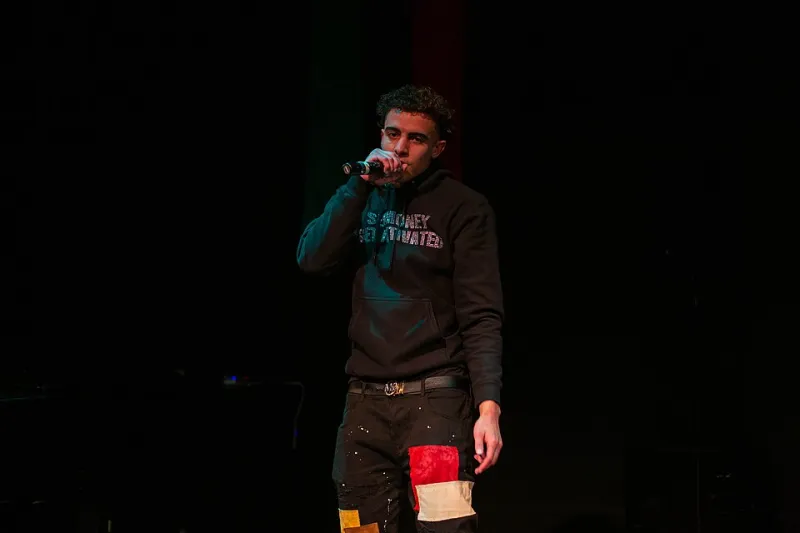
Photo: usfcapasj, CC BY 2.0, via Wikimedia Commons
There’s a moment at nearly every Raleigh studio recital when a student walks to the front, and the teacher leans toward the microphone to say the name and the piece. It’s efficient. It’s also a missed opportunity. When the student handles those thirty seconds themselves, the room leans in differently. The performance stops feeling like a display and starts feeling like a conversation.
That’s not a small thing. A recital is already a stretch for most players—especially kids and late-start adults who aren’t used to being watched. But a brief, well-practiced introduction gives them a job before the first note. It settles the hands. It gives the audience a person to root for, not just a piece to grade.
The trick is keeping it short. Thirty seconds is the target. Sixty is a speech. Here’s how to coach it without turning the whole thing into a public speaking seminar.
What the Thirty Seconds Is Actually For
An introduction is not a biography. It’s not a thank-you list. It’s not a disclaimer about how nervous you are or how badly the piece has been going at home. It has three jobs: identify the player, identify the music, and give the audience one small hook to hold onto.
That hook can be a reason for choosing the piece, a single technical challenge, a memory connected to it, or a quick note about the arrangement. One sentence. Then play.
The Three-Part Skeleton
For almost every age, the structure is the same:
- Who you are. First name is plenty for kids. Full name is fine for adults if they prefer it.
- What you’re playing. Title, composer, and—if it’s an arrangement—the arranger. Say it slowly enough that people catch it.
- One short hook. Why this piece? What should listeners notice? Keep it to a breath.
That’s it. No runway. No preamble about how long you’ve been taking lessons unless it’s genuinely part of the story and fits in one sentence.
Sample Scripts by Age
Ages six to eight: “Hi, I’m Maya. I’m playing ‘Twinkle, Twinkle, Little Star.’ I picked it because my dog howls when I practice it.”
One breath, one smile, done. At this age, the goal is comfort with the microphone and the sound of their own voice in the room. The content barely matters.
Ages nine to twelve: “I’m Jonah. This is ‘Ode to Joy’ by Beethoven. We’ve been working on the loud and soft parts, so you’ll hear some back-and-forth.”
This is where a tiny bit of listening guidance helps. It tells the audience what to notice without asking them to study up.
Teens: “I’m Priya. I’m playing the first movement of the Vivaldi concerto. I chose it because the fast section feels like a conversation, and I wanted to see if I could keep it clean at tempo.”
Teens can handle a little more honesty and a little more personality. They can also smell a script that sounds like a teacher wrote it. Let them use their own words.
Adults: “Good evening, I’m David. I’m playing a guitar arrangement of ‘Blackbird.’ I started lessons about two years ago, and this is the first piece I’ve played all the way through without stopping.”
Adult learners often want to explain themselves. One sentence of context is plenty. The music does the rest.
What to Leave Out
Skip the apology. No “I’m sorry, I’m nervous” and no “this isn’t perfect yet.” The audience didn’t come to judge; they came to listen. Apologizing before you start tells them to expect a problem.
Skip the long backstory. If the story of how you found the piece takes longer than the piece itself, it’s a blog post, not an intro.
Skip the instrument excuse. Cold rooms, new strings, sticky keys—these are real, but they belong in a quick word to the teacher, not the microphone.
And skip the self-deprecating joke unless it’s genuinely funny and genuinely short. Nerves masquerading as humor usually lands flat.
Coaching the Nervous Speaker
For kids, practice with a stuffed-animal audience first. Then a real human. Then two humans. Then the family dog, if the dog is calm. The progression matters more than the polish.
For adults, record one take on a phone and watch it with the sound off. Most people are surprised by how normal they look. Nerves are loud on the inside and quiet on the outside.
Memorize the first sentence only. That gets them moving. The rest can be glanced at on an index card if needed. No one in the audience will remember whether the card was there; they’ll remember whether the player seemed at ease.
A Two-Week Rehearsal Plan
Week one: Days one and two, write the intro in three sentences. Days three and four, say it out loud to one person. Days five through seven, say it before playing at home—standing up, at normal speaking volume.
Week two: Days eight through ten, run the full intro plus the piece. Days eleven and twelve, practice in a different room and with shoes on, because recital rooms are not living rooms. Day thirteen, do it once for a neighbor or on a video call. Day fourteen, rest the intro and just play the piece.
The point is repetition without drilling the life out of it. Two weeks is enough. Two months is too much.
The Raleigh Room Factor
Raleigh recitals happen in church fellowship halls, studio rooms, community theaters, and the occasional borrowed auditorium. Acoustics vary wildly. A normal speaking voice may feel too quiet in a carpeted room and too loud in a tiled one. Practicing at a conversational volume is the safest bet. No shouting. No whispering.
If there’s a microphone, step close enough to be heard but not so close that the first consonant pops. If there’s no microphone, aim the voice at the back row and let the room do the work.
When It Goes Sideways
Forget a line? Say the title and start playing. The audience won’t know what was missing.
Freeze completely? A parent’s thumbs-up from the third row or a teacher’s quiet prompt is not a failure. It’s a handoff. The music is still the main event.
Microphone squeal? Step back, wait a beat, and continue. These things happen in every venue in Wake County and beyond.
The thirty-second intro is short on purpose. It’s a handshake, not a speech. When students own that handshake, the first note lands differently—for them and for everyone listening.