Three Songs, One Phone: Recording an Honest First Demo
Recording a first demo can feel like a test you didn't study for. The good news is that it isn't an audition, an album release, or a claim that you've arrived. For most teen and adult students, a first demo is a snapshot — three songs that show what you can do right now, warts and all. Done simply, it's also one of the most useful feedback tools you can hand a teacher.
You don't need a studio. A phone, a quiet room, and a little patience will do more than a pile of plugins. Here's a step-by-step way to make a three-song demo that sounds honest, shares safely, and gives you something to measure progress against.
Decide what the demo is for
Before you choose songs, name the purpose. Is this for a teacher's ears, so you can get specific notes on timing and tone? Is it for family who live out of state? Is it a personal checkpoint you'll compare with a recording three months from now? Each purpose changes how polished the result needs to be.
For teacher feedback, leave the rough edges in. A perfectly comped vocal with tuning correction hides the exact things a teacher needs to hear. For family and friends, a clean, complete take is usually more satisfying than a fragment. For a personal checkpoint, consistency matters more than perfection: same room, same phone, same setup each time.
Pick three songs that do different jobs
A good three-song set isn't three versions of the same thing. Try one song you can play comfortably, one that stretches you, and one you simply love. Or choose contrast by tempo, era, or mood — a ballad, an up-tempo tune, and something in between.
Keep each song short enough to record in one sitting. Two to four minutes is plenty. If you're working on a long piece, record an excerpt and label it clearly. And think about rights: for a private demo shared with family or a teacher, a cover is usually fine. If you plan to post it publicly, stick to original songs, public-domain material, or songs you have permission to use. When in doubt, keep the share private.
Set up a room that gets out of the way
You want a room that doesn't announce itself. A carpeted living room with bookshelves and soft furniture is usually kinder than a bare kitchen with hard floors. Avoid rooms with loud HVAC vents, refrigerators, or street noise. Turn off fans and notifications. If you can, record when the house is quiet.
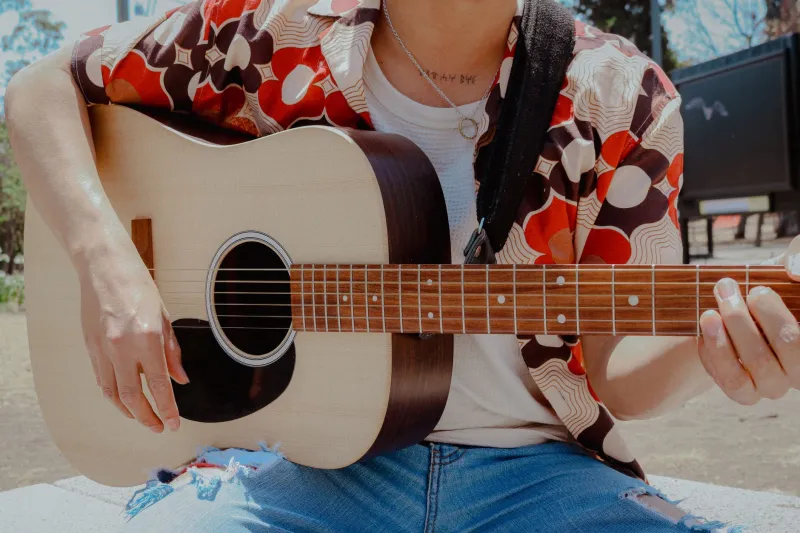
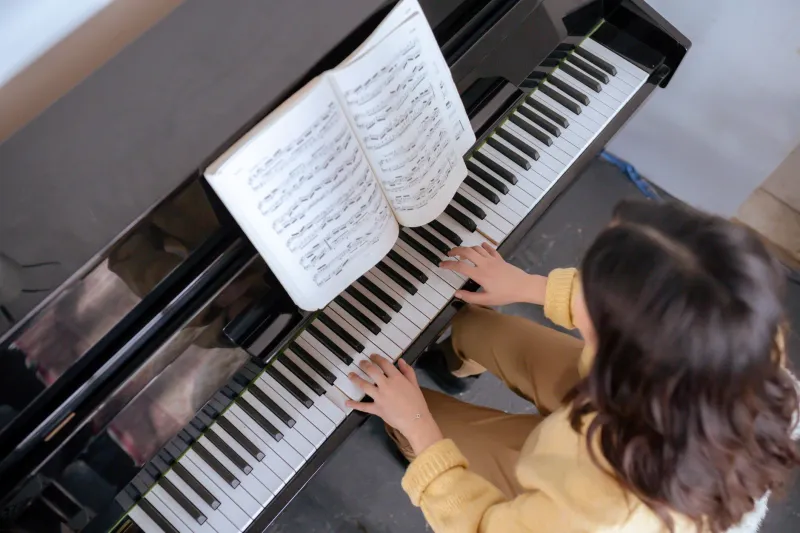
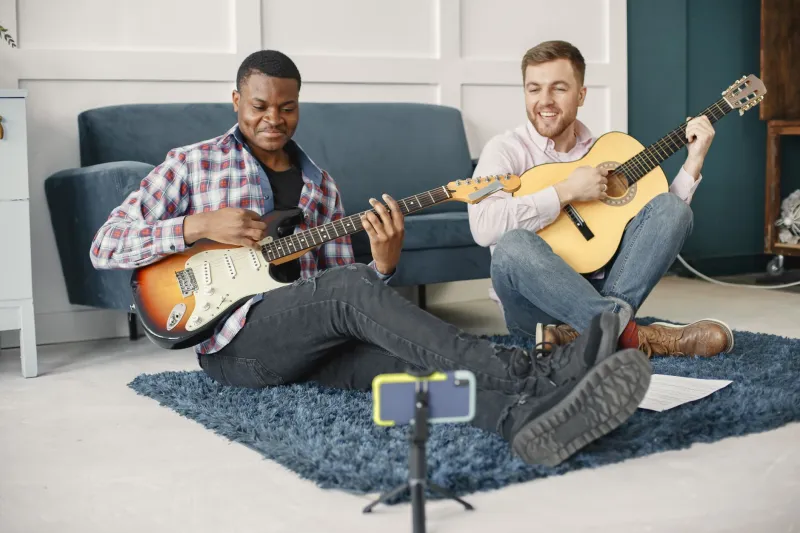
Place the phone on a stable surface — a music stand, a tripod, or a stack of books — not in your hand. For voice and acoustic guitar, start with the phone about six to twelve inches away, slightly off to the side of your mouth or the instrument's soundhole. For piano, pull the phone back a bit so it can hear the whole instrument. For a wind instrument, don't point the phone directly into the bell; angle it slightly across the room.
Do a twenty-second test take and listen with headphones. If the sound is thin, move the phone closer. If it's boomy, move it back or angle it differently. If you hear a hum, check for chargers and cables. Small placement changes make a bigger difference than most free apps.
Use the tools you already have
Your phone's voice memo app is enough. If you want more control, free apps like GarageBand, BandLab, or Audacity can handle basic recording and trimming. You don't need reverb, autotune, or a plug-in chain. In fact, heavy effects tend to make a first demo sound less like the player and more like a preset.
Watch your levels. You want the loudest parts to stay below clipping — if the waveform is a solid brick, back off. Record in a quiet room rather than trying to fix noise later. Keep the phone in airplane mode if notifications are a problem, but remember that some phones handle audio differently in airplane mode; test first.
Record complete takes, then choose
Aim for two or three full takes of each song. Don't stop at every mistake. The goal is a take that feels like a performance, not a patchwork. After each take, note one thing you want to change — tempo, breath, dynamics, an entrance — and apply it to the next.
When you listen back, choose the take with the best overall feel, not the one with the fewest visible errors. A slightly imperfect take with conviction usually beats a stiff, corrected one. If you need to fix one obvious clam, a single punch-in is fine. Comping every word or note often sucks the life out of the performance.
Mix gently
For a phone demo, mixing mostly means balance and housekeeping. Trim the silence at the start and end. Set the overall level so the recording isn't painfully quiet or distorting. If you're layering a voice and guitar, bring the accompaniment down until the lyric is clear. Avoid heavy compression and reverb until you've lived with the raw version for a day.
Export as a WAV if your app allows it, or a high-quality MP3. Name the files clearly: first name, song title, date. Future you will appreciate the organization.
Listen like a teacher, not a judge
Play the demo through headphones, then through a phone speaker, then in the car. Each reveals something different. Headphones expose timing and pitch; a phone speaker shows whether the melody still carries; the car is a reality check for overall balance.
Write down three observations, not thirty. Maybe the second verse rushes, the chorus needs more dynamic lift, or the guitar and voice aren't locking on the bridge. Bring those notes to your next lesson. A teacher can hear things you can't, but specific observations make the feedback more useful.
Share it safely and specifically
For family, a private link through Google Drive, Dropbox, or a messaging app is usually simplest. For a teacher, send the files plus your three observations. Ask for feedback on one or two specific things rather than a general 'what do you think?' If other people are audible in the recording, get their permission before sharing. For teens, loop in a parent before anything goes public.
If you post online, think about privacy. Use a first name or a stage name, avoid location tags, and keep the audience private or unlisted if you're not ready for broad attention. Cover songs can be tricky on public platforms; original material or public-domain tunes are safer. A demo doesn't need to be public to be real.
Make it a checkpoint, not a verdict
Date the folder and keep it. In three months, record another three songs with the same setup. The comparison will tell you more about your progress than any single take. You'll hear cleaner entrances, steadier time, or a wider dynamic range — the small wins that lessons and practice are built on.
A first demo is not a final exam. It's a record of where you are, made with the tools you have, in the room where you practice. That's exactly what makes it worth sharing.