Small Sessions, Big Wins: Why Fifteen Minutes a Day Beats the Weekend Marathon
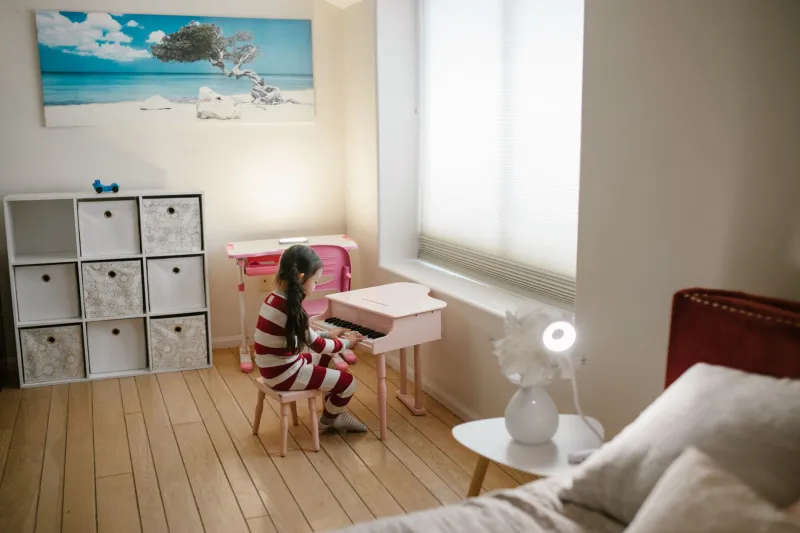
Fifteen minutes. That's the whole pitch. Not ninety minutes on Sunday, not a heroic Tuesday-night cram session before lessons. At Raleigh Music Academy, the students who make the smoothest progress are usually the ones who practice a little almost every day — and then go live their lives.
It sounds too simple, especially in a culture that rewards the weekend marathon. But ask any instructor who teaches beginners in Five Points or North Hills and they'll tell you the same thing: consistency beats intensity for almost every learner, whether the student is seven or seventy.
The weekend marathon problem
The Sunday cram feels productive. You clear the calendar, sit down for an hour, and knock out everything on the assignment sheet. Then Monday disappears, Tuesday gets busy, Wednesday is a wash, and by Thursday the student is essentially starting over. That's not a motivation problem. It's a memory problem. Motor skills and musical patterns consolidate best through repeated, spaced exposure — not one heroic block.
For kids, long sessions also bump into attention limits. A second grader might focus hard for eight or ten minutes before form collapses and frustration creeps in. Adults have longer attention spans but shorter patience for guilt. A missed marathon becomes evidence that they're 'bad at practicing,' which is a terrible story to bring to a lesson.
Why tiny reps win
You don't need a neuroscience lecture to see the pattern, but the research is friendly to the fifteen-minute habit. Spaced practice — spreading learning across days — tends to outperform massed practice for retention. Sleep helps lock in what was practiced. And short sessions keep the brain fresh enough to notice small corrections, which is exactly what a teacher is asking for.
Do the math: fifteen minutes a day is 105 minutes a week. A single two-hour weekend session is 120 minutes. Close enough, right? Not really. The daily student touches the instrument seven times, reinforces the habit seven times, and gives the teacher seven days of feedback to build on. The weekend student gets one big rep and six days of forgetting.
There's also an emotional advantage. A fifteen-minute promise is easy to keep. Easy promises build identity: 'I'm someone who practices.' Big promises build avoidance: 'I'll do it later when I have time.'
What a fifteen-minute session actually looks like
A good micro-session has a shape. It doesn't need to be fancy, and it definitely doesn't need to be perfect.
- Three minutes: warm-up. Long tones, scales, a simple chord progression, or a easy song the student already knows.
- Seven minutes: the focus block. One assignment, one correction, one small goal. Not the whole page.
- Three minutes: play for fun. A favorite riff, a duet with a parent, or improvising over a backing track.
- Two minutes: log it. Write down what was practiced and one thing that felt good.
For piano students, that might mean a five-finger scale, two measures of the new piece, and a familiar tune. For guitar, it could be a chord switch, a strumming pattern, and a song snippet. Voice students can warm up, work one phrase, and sing something they love. The instrument changes; the rhythm of the habit doesn't.
The printable weekly practice chart
Print this, tape it to the fridge, and let the student own the checkmarks. The goal is not a perfect week. The goal is a visible record of showing up.
| Day | 15-minute check | What we worked on | One thing that felt good |
|---|---|---|---|
| Monday | [ ] | ||
| Tuesday | [ ] | ||
| Wednesday | [ ] | ||
| Thursday | [ ] | ||
| Friday | [ ] | ||
| Saturday | [ ] | ||
| Sunday | [ ] |
For younger students, add a sticker for each checkmark. For adults, add a weekly reward that has nothing to do with music — a good coffee, a walk, a phone call to a friend. Habit stacking helps too: practice right after breakfast, right before homework, or right after the dog's evening walk.
Instructor tips: keep it a habit, not a chore
Maya Ellison, a piano instructor at Raleigh Music Academy, says the families who succeed are not the ones with the most free time. 'They're the ones who make practice boring in the best way — same time, same spot, same little routine,' she says. 'The instrument stays out. The chart stays visible. Nobody has to negotiate from scratch every day.'
Devon Price, who teaches guitar, offers a simple rule for ending on a high note: 'End on a win. If the last two minutes are a song they love, they'll come back tomorrow without a fight.'
A few more instructor-approved moves:
- Set a timer. Fifteen minutes feels finite when it's ticking.
- Stay nearby for the first two minutes with younger kids, then step away.
- Record a weekly phone video. Students hear progress they can't feel day to day.
- Never use practice as punishment. If a student is melting down, close the case and try again tomorrow.
- Ask the teacher for a one-sentence practice priority each week. Ambiguity kills consistency.
Missing a day is not a failure
The fifteen-minute habit has a built-in recovery plan: never miss twice. One missed day is life. Two missed days is a pattern starting to fray. On travel weeks, shrink the session to five minutes — one scale, one phrase, one listen. On vacation, sing in the car or tap rhythms on a steering wheel. The point is to keep the thread intact, not to prove anything.
The payoff is steadier than perfect
Short daily practice doesn't produce overnight miracles. It produces something better for most families: fewer meltdowns, faster lesson momentum, and a student who walks into recital season knowing they've been showing up. That's not a weekend marathon. That's a habit — and at Raleigh Music Academy, that's the win we're playing for.