The First-Instrument Fit Check: A Parent’s Guide to a Comfortable Start
Most parents begin instrument shopping with a short list: piano, violin, maybe guitar. That list is not wrong, exactly. It is just incomplete. At Raleigh Music Academy, we have watched plenty of kids light up at the piano and plenty of others slump over the keys until a ukulele or a snare drum finally makes sense. The first instrument does not have to be the forever instrument. It does need to be a comfortable place to start.
The Default Choice Is a Starting Point, Not a Verdict
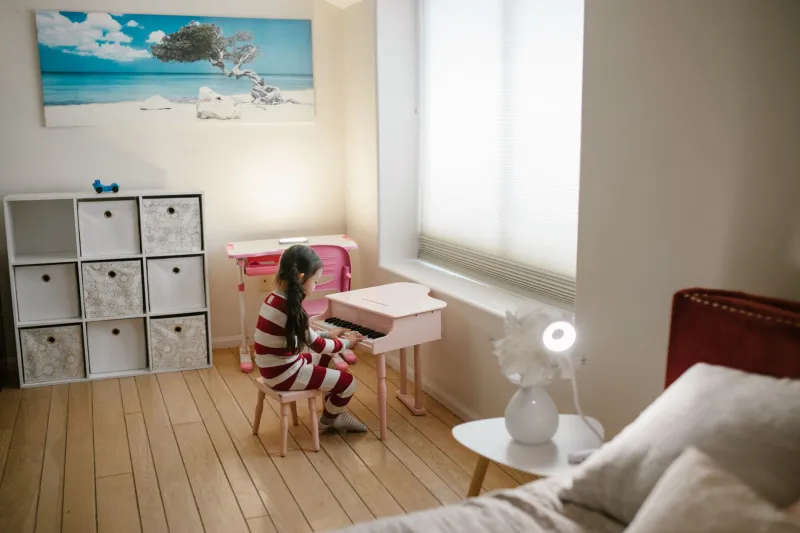
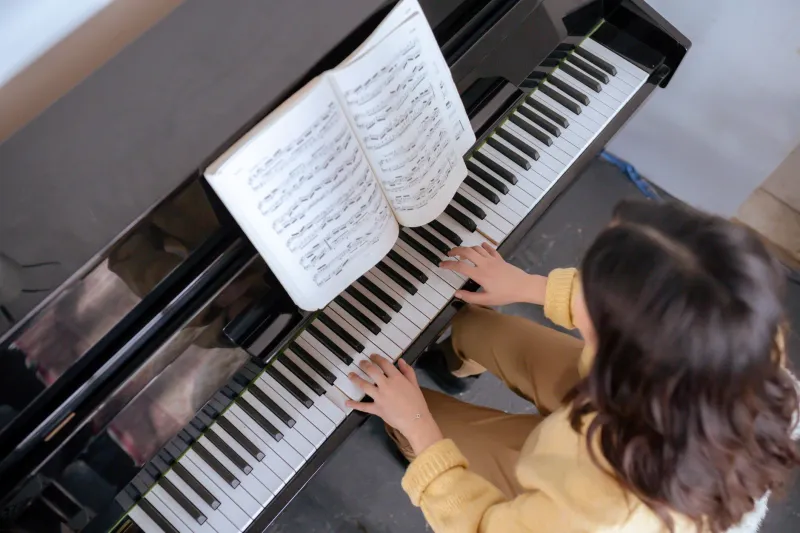
Piano often gets recommended because it is visually clear: press a key, hear a note. Violin often gets recommended because it is a classic starter instrument and comes in small sizes. Both can be excellent. But a child who is sensory-sensitive to loud sounds may struggle in a small violin room, and a child who needs big body movement may feel trapped at a keyboard. In the Triangle, we are lucky to have plenty of options for lessons, rentals, and instrument trials. Use that variety instead of treating the first suggestion as a permanent assignment.
Five Fit Factors Worth Watching
1. Physique and hand size
A smaller child may do better with a violin, ukulele, or drum pad than with a full-size guitar. Hand span matters, but so does shoulder comfort and posture. A child should be able to hold the instrument without hiking up one shoulder or craning their neck. For piano, short fingers are usually fine at the start; for guitar, a fractional-size instrument can make the first months much friendlier.
2. Breath and body support
Woodwinds and brass require steady breath support. That is not a dealbreaker for most kids, but it is worth noticing. If your child gets winded easily, has asthma concerns, or simply dislikes blowing games, a percussion, string, or piano start may feel less frustrating. Always check with a pediatrician if breath support is a real health question.
3. Attention span and energy
Some children thrive on the fine detail of a clarinet fingering chart. Others need to hit something and hear an immediate beat. A good fit respects your child’s natural attention rhythm. A beginner lesson is short, but practice at home still has to happen. If your child needs movement, a drum kit or a larger string instrument may hold attention better than a quiet keyboard session.
4. Sensory preferences
Sound texture matters. Violin bowing can be scratchy at first. Trumpet can be loud. Piano is predictable. Drums are physical. Ask simple questions: Does your child cover their ears around loud music? Do they dislike the feel of rosin or metal strings? Do they seek out rhythm and tapping? There is no right sensory profile, only a better or worse match.
5. Personality and practice style
A social kid may love group guitar or ukulele. A focused kid may enjoy piano solos. A kid who likes to perform may gravitate toward voice or theater music. A kid who likes to tinker may enjoy the mechanical puzzle of a woodwind. None of this is destiny, but it is useful information.
A Simple Fit-Check Scorecard
Give each statement a score from 0 to 2: 0 means not really, 1 means sometimes, and 2 means definitely. This is a conversation starter, not a test.
- My child can hold or reach the instrument without obvious strain.
- The instrument’s volume and sound do not overwhelm my child.
- My child can stay engaged with one activity for about the length of a beginner lesson.
- My child is excited to touch or try the instrument.
- The instrument matches my child’s energy level, whether calm or active.
- My child can practice in a space where the instrument fits comfortably.
- My child likes the idea of the sound the instrument makes.
- My child is willing to try it for a few weeks before deciding.
A score of 0 to 5 is a signal to slow down and try a different option. A score of 6 to 10 is a reasonable trial zone. A score of 11 to 16 is a strong starting point. Again, use the score to guide questions, not to rule out a child who is simply nervous about trying something new.
Trial Periods, Rentals, and the Smart Switch
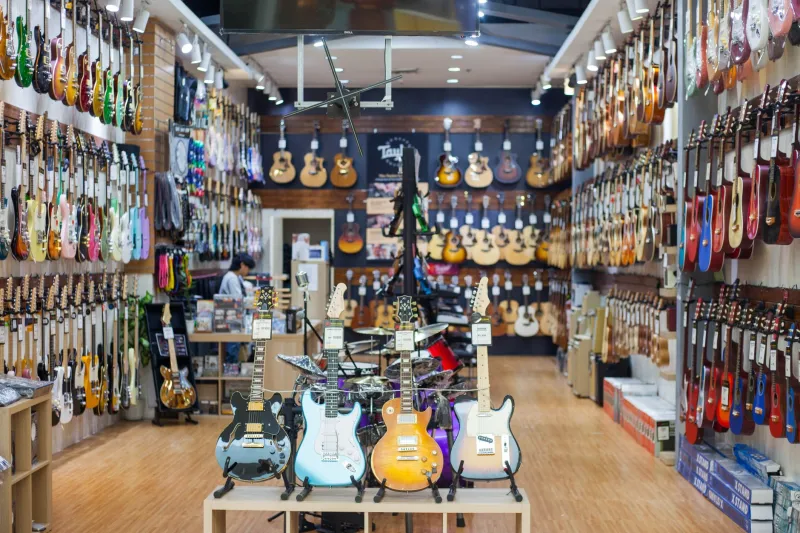
A four-to-eight week trial is often enough to learn whether an instrument is a reasonable fit. Rentals are especially helpful for growing kids and for families who are not ready to buy. Many music shops in Raleigh offer rent-to-own plans, and a teacher can help you decide whether a fractional-size violin or a short-scale guitar makes sense.
If your child dreads practice, complains about physical discomfort, or consistently avoids the instrument after a fair trial, that is data. It is not failure. Switching instruments is calibration. The goal is not to prove you made the perfect first choice. The goal is to keep your child connected to music long enough to build real skills. Sometimes that means a different instrument, a different teacher style, or simply a few more weeks of patience.
At Raleigh Music Academy, we would rather see a student switch to a better-fitting instrument than quit music altogether. The first instrument is a doorway, not a life sentence. Find the door that opens most easily.