The Seasonal Instrument Check: Small Monthly Habits That Keep Student Gear Ready
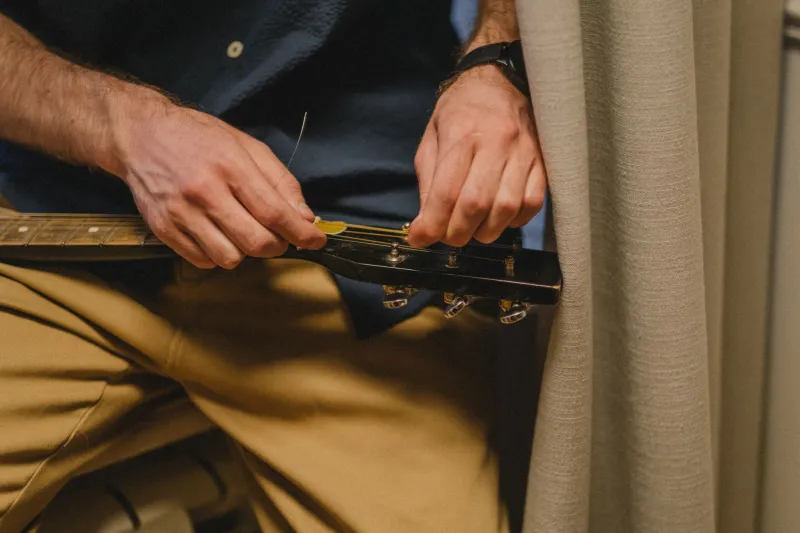
Raleigh weather likes to keep student musicians on their toes. A violin that felt perfectly settled in September can start fighting its pegs by Thanksgiving, and a guitar that lived happily in a bedroom all summer may buzz once the heat kicks on. None of that means the instrument is doomed. Most of it means the instrument is doing what wood, metal, and reeds do when the air around them changes.
A short monthly once-over won't replace a professional setup or a piano tuning. What it will do is catch small problems before they become expensive ones — and keep practice time from turning into troubleshooting time. Ten minutes on the first Sunday of the month is enough to notice what's changed.
Why a monthly check is worth the effort
Students make faster progress when their instrument responds predictably. A sticky key, a slipping peg, or a pad that no longer seals turns every practice session into a negotiation. Younger players often don't know how to describe the problem; they just know the instrument feels harder than it did last week. Adults are sometimes tempted to push through, assuming the issue is their technique.
A monthly check gives everyone a simple baseline. You're not trying to repair anything. You're looking, listening, and writing down anything that seems off. That record is useful when you talk with a teacher or a repair tech.
Start with the room, then the case
Before you touch the instrument, glance at where it lives. Is it near a heating vent, a sunny window, or an exterior door that lets in drafts? Is the case stored in a garage, attic, or car? Those spots are hard on instruments, especially through Raleigh's humid summers and dry winter indoor air.
A cheap hygrometer can tell you what the room is actually doing. Most acoustic instruments are happiest in a middle range — roughly 45 to 55 percent relative humidity is a common target — but the bigger point is stability. Swings are the enemy. If a room is consistently dry, a case humidifier may help; if it's consistently damp, a dehumidifier or a different storage spot may be smarter. For pianos, keep the instrument in one stable location and away from direct sun and vents. Don't move a piano just to chase a humidity number.
The ten-minute route
Set a timer and work through the instrument you actually play. Skip anything you don't understand. The goal is observation, not repair.
Piano
- Play every key from bottom to top, softly and then at a normal volume. Listen for sticking, double strikes, buzzes, or keys that feel heavier than their neighbors.
- Check the pedals for squeaks or looseness.
- Dust the case and the area around the music desk with a soft cloth. Keep liquids off the piano.
- Look for cracks in the soundboard or loose cabinet parts, but don't open anything up.
- Note when it was last tuned. Most home pianos need tuning once or twice a year, and a move or a big seasonal shift can justify an extra visit.
Guitar and bass
- Tune up, then play a few open chords and a scale. Listen for fret buzz or dead notes.
- Check the bridge, saddle, tuning machines, strap buttons, and output jack if the instrument is electric. A loose jack nut is a common culprit for crackling.
- Wipe the strings and the back of the neck after playing. String life depends on hand chemistry and how often you play.
- Look at the neck from the side. You're not adjusting anything — just notice if the relief looks dramatically different from last month.
- Keep the case or gig bag out of hot cars and damp basements.
Violin, viola, cello, and double bass
- Make sure the bridge is standing upright and roughly centered between the f-holes. If it's leaning, stop and ask a teacher or luthier.
- Check the pegs and fine tuners. They should turn smoothly without slipping or jamming.
- Look at the strings for fraying, corrosion, or false notes.
- Check the bow hair and the stick. Rosin should be applied lightly, not caked on. Loosen the bow hair after playing.
- Dust the instrument with a soft cloth. Avoid household polish and don't touch the varnish with anything you wouldn't use on a nice piece of furniture.
- Keep an eye on seams and edges. A small open seam is a repair-tech visit, not a glue-gun project.
Flute, clarinet, saxophone, trumpet, and other winds
- Swab or drain the instrument after every playing session, not just once a month.
- Check corks, pads, springs, and key action. Pads should seal cleanly and keys should move quietly.
- For woodwinds, look for torn or discolored pads and sticky keys. A sticky key can often be blotted with cigarette paper, but repeated sticking is a tech issue.
- For brass, check valve action, slide movement, water keys, and mouthpiece condition. Use the oil and grease made for the instrument, not household lubricants.
- Reeds should be rotated and replaced when they're soft or chipped. A warped reed can make a good instrument feel unreliable.
Warning signs that mean 'call the repair tech'
Some problems are fine to watch. Others need a professional before they get worse. Put the instrument down and make a call if you see a cracked or warped bridge, a separated seam, a loose tuning peg that won't hold, a key or valve that sticks repeatedly, a pad that's torn, a crack in the body or neck, a buzzing electronic jack, or a piano key that doubles or fails to return. Don't adjust a truss rod, soundpost, or piano action on a whim. Those are jobs for someone with the right tools and experience.
Keep momentum while the instrument is in the shop
A repair visit doesn't have to stall progress. Students can work on rhythm with a metronome, sing solfege, review theory, practice sight-reading, or listen actively to recordings of their pieces. Adult learners can use the time to clean up practice notes and plan the next month. Teachers can usually suggest instrument-free assignments that still move the music forward.
Make the check a calendar habit
Pick a recurring day — the first Sunday, the last Friday, whatever sticks — and tie the check to something that already happens, like lesson prep. Keep a note on your phone for anything that felt odd. Bring that list to your next lesson. A teacher can often tell whether a problem is the instrument, the setup, or just a growth spurt in the student's playing.
Ten minutes won't catch everything. But it will catch enough small things that the big things show up less often. And for a student, that reliability is a quiet confidence boost: the instrument is ready, so practice can be about the music.